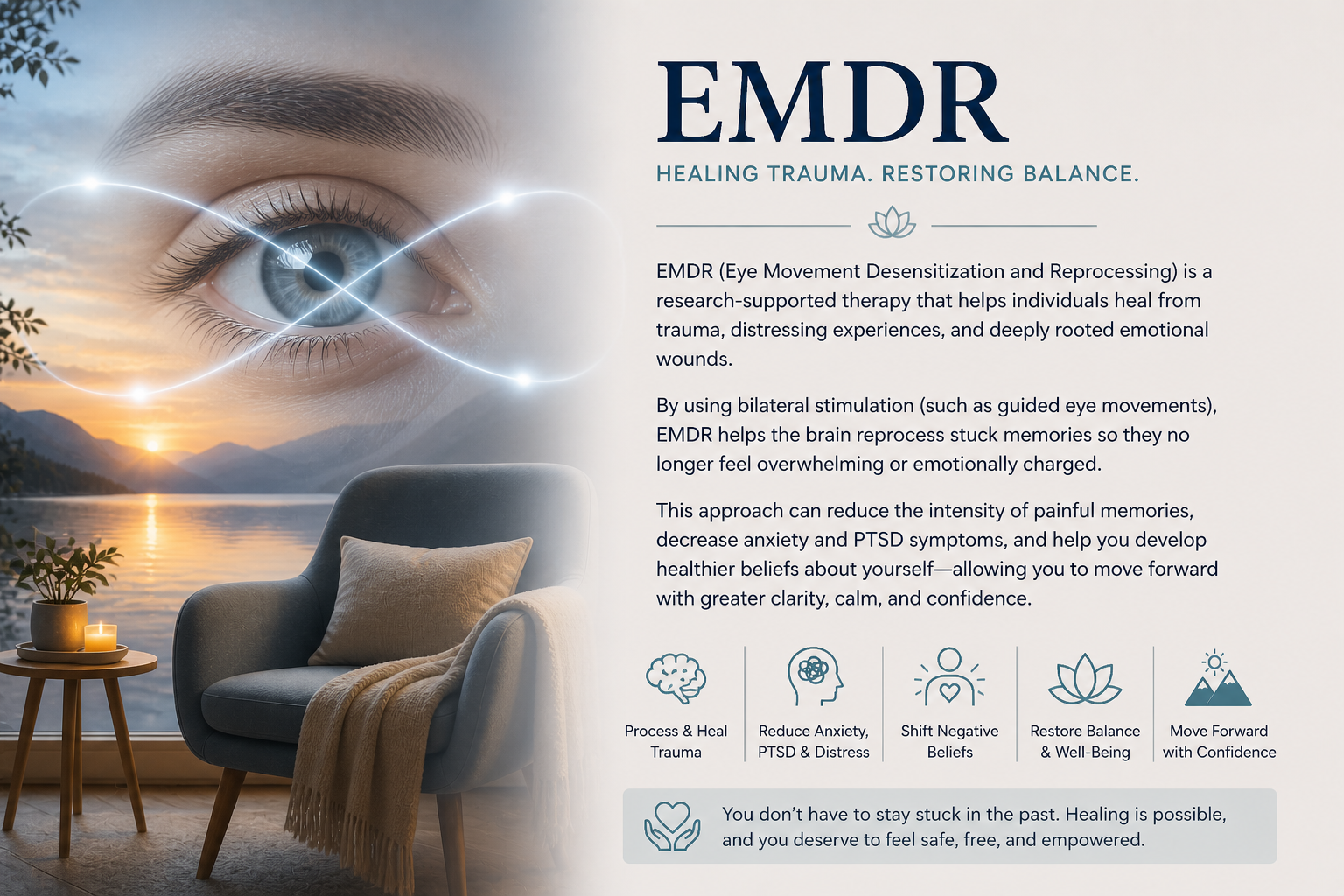
EMDR is one of the most well-researched and effective therapeutic approaches for trauma. Originally developed to treat PTSD, it is now widely used for a range of concerns, including anxiety, phobias, grief, negative self-beliefs, and the lasting effects of childhood experiences.
EMDR therapy in Calgary at Eunoia Zen offers clients access to this powerful modality in a safe, supportive environment — guided by a practitioner who has experienced its effects firsthand.
How EMDR Works
When we experience something distressing, the brain sometimes fails to process it the way it does ordinary memories. Instead, the experience gets stored in a fragmented, emotionally charged way — and can be retriggered by present-day situations that carry a similar emotional signature. This is why trauma can feel so immediate, even when the event happened years or decades ago.
EMDR uses bilateral stimulation — typically side-to-side eye movements, or alternating taps — to activate the brain's natural processing system. While holding a distressing memory in mind alongside the bilateral stimulation, the brain begins to reprocess the experience, reducing its emotional charge and integrating it into ordinary memory.
It is not hypnosis, and you remain fully aware and in control throughout. Most clients describe the process as noticing that a memory which once felt overwhelming gradually loses its intensity — becoming something that happened, rather than something that is still happening.
What EMDR Can Help With
Post-Traumatic Stress Disorder (PTSD) and complex trauma
Childhood trauma and adverse early experiences
Anxiety and panic
Phobias
Grief and loss
Negative core beliefs ('I am not enough,' 'I am unlovable,' 'I am not safe')
Performance anxiety
The emotional residue of difficult relationships or experiences
What to Expect in EMDR Sessions
EMDR is conducted in phases. The early sessions focus on building a thorough understanding of your history and preparing you with stabilization skills — so that when you begin processing distressing memories, you have the resources to manage what comes up.
Processing sessions involve identifying a specific memory or belief, rating its emotional intensity, and working through it with bilateral stimulation. The therapist carefully guides the pace, checking in regularly and ensuring you feel safe throughout.
Not every session involves active processing — some sessions focus on stabilization, integration, or working with what emerged in previous sessions. The approach is always responsive to where you are.
A Personal Note from Furkhan
EMDR is not just a modality Furkhan uses with clients — it's one he has experienced himself. Working through distressing experiences with his own therapist using EMDR gave him a direct understanding of how powerfully it can shift perspective. That lived experience informs how he holds space for clients in the process.
Is EMDR Right for You?
EMDR is appropriate for many people, but not always the right starting point. In an initial consultation, Furkhan will discuss your history, your current level of stability, and whether EMDR is a good fit — or whether other therapeutic approaches might serve you better first.
EYE MOVEMENT DESENSITIZATION REPROCESSING (EMDR) Therapy in Calgary
Learn More: